« September 2007 | Main | November 2007 »

Academic discourse and another OU blogger

My colleague Grainne Conole has started blogging recently. There is something about blogging, it becomes a sort of benign religion you want to convert others to, so I'm always really pleased to see someone else take to it. And Grainne really seems to be enjoying it, she seems to have 'got it' (whatever it is), straight away. It reminds me of when I was younger and a band was breaking, you'd want to press the information on everyone else. I remember this most specifically with the Stone Roses in 1989/90 - it was a real viral spread, you'd lend someone the album and they'd come back two days later with that converted look..

Anyway, Grainne has a good post on the nature of academic discourse, talking about the nature of journal articles, conference papers and blogs:

"So the function and nature of the three media seems to be:

  • Academic paper: reporting of findings against a particular narrative, grounded in the literature and related work; style – formal, academic-speak
  • Conference presentation: awareness raising of the work, posing questions and issues about the work, style – entertaining, visual, informal
  • Blogging – snippets of the work, reflecting on particular issues, style – short, informal, reflective "

While I think this is true in general, increasingly I'm finding that I prefer the blog for all my output. I may have been over-converted.

The topography of formality

Just as we think of learning being bundled into a convenient course package (see last post) so we think of the formalisation of learning being grouped into large chunks. Informal learning is difficult to recognise and accredit, and is thus often overlooked in favour of formal education. There is an intrinsic paradox with informal learning – in order to reward and recognise it, then it needs to be formalised in some manner. So, even if we accept that informal (or if you prefer non-formal) learning will be brought in to the fold increasingly, it still needs to be formalised in some manner.

Skyscrapers_2If we were to consider the formalisation of learning as a topography then currently it is a flat plain with a few high peaks, rather like skyscrapers in a desert, representing courses. The learner traverses this landscape over their lifetime, most of it spent on the flat plain, with no easy access to formal recognition, and is then requested to climb large peaks of formality, such as a postgraduate course.

This bears little resemblance to how they actually learn, which will have some peaks, but will be more evenly distributed.

Archipelago1In the online world however, this topography could be subject to considerable change. The peaks become shallower, but more frequent, so it is more akin to an archipelago. In this model, the digitisation of content and interaction allows users to gather evidence of informal learning on a daily basis. They may then choose to bundle this into a formally recognised event, for example by having their portfolio assessed, or engaging in a ‘micro-course’ which demonstrates their ability in a given area, or by creating a meta-document of their own, for example a reflective blog post that draws on the different pieces of evidence.

Ironically, this is actually how educators conduct their professional lives. An educator may engage in a research project and they will formalise this learning through conference presentations or journal articles. They will bundle together recent experience into published text books, or project reports. In this respect the academic profession has a number of recognised means of formalising learning. Many other professions and individuals do not have such readily available and acknowledged means of unifying recent learning and experience.

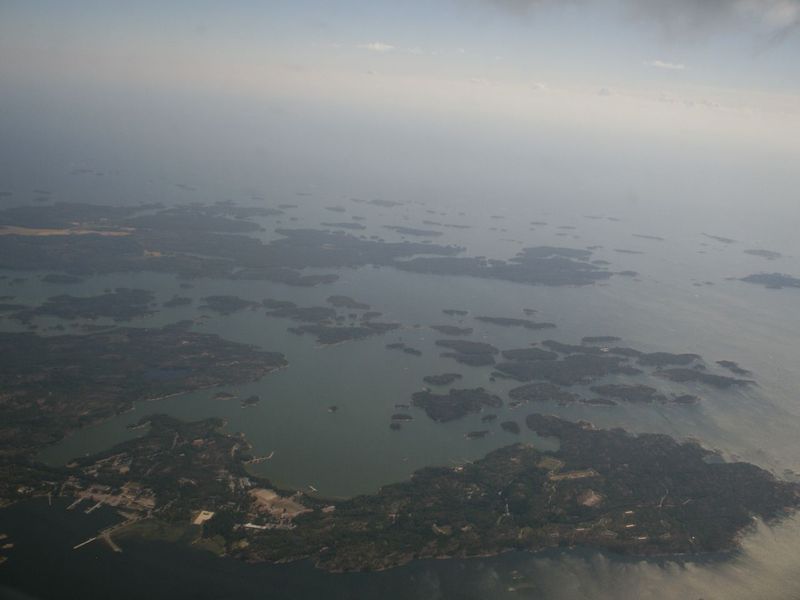
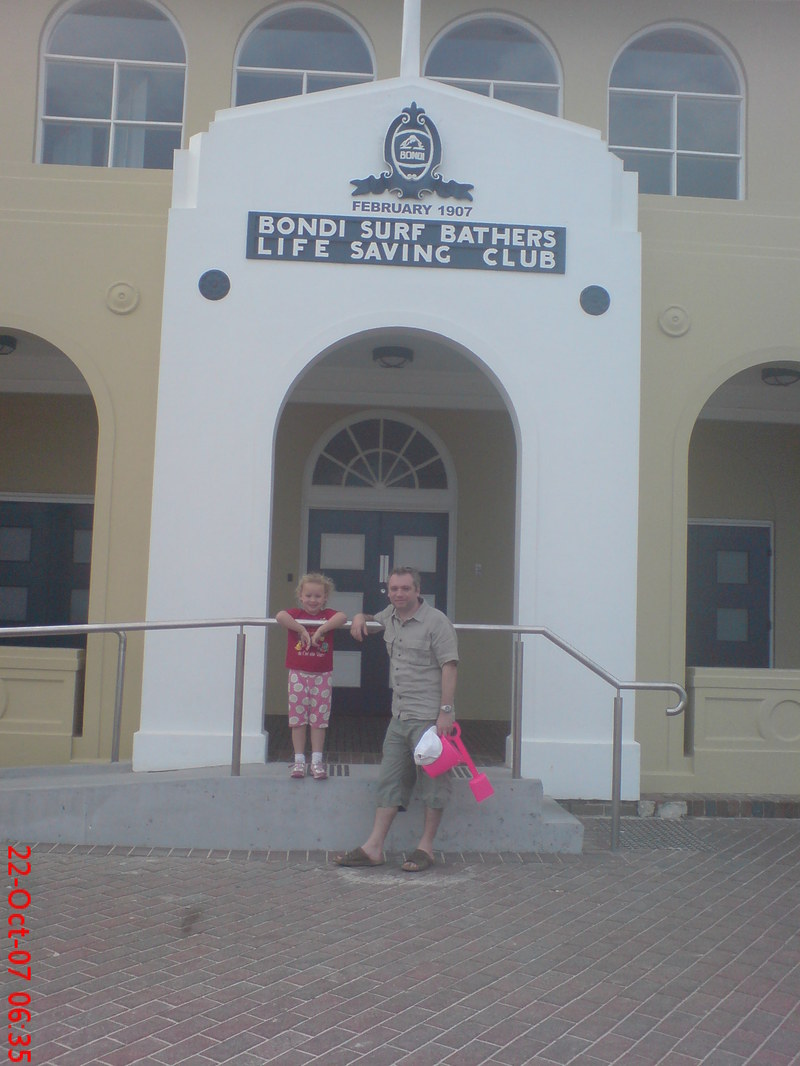
Oh, and why not - gratuituous Bondi tourist photo:

Dsc00265

(Photos: Gavinsblog http://www.flickr.com/photos/gavinsblog/91871302/, Stefe http://www.flickr.com/photos/stefe/236802005/)

The granularity of education

(slight apology for repeating elements from previous posts, but worth gathering in one place).

One of the things I've been thinking about here in Sydney is how learning design can help bridge the gap between web 2.0 and higher education. I'm writing a paper on this which sets out the argument in detail, but I'll post elements of it here as I go along.

One issue I think web 2.0 raises for education is about the granularity of education. I've blogged before about the granularity of ideas, so this is extending that a little.

The digitisation of content and its frictionless distribution on a global scale is challenging many of the assumptions we have about the format of content and the underlying business models that support these. Often these are so ingrained in our view of the content and its related businesses that we do not even recognise them as assumptions.

Prior to digitisation, all content was bound up in its physical form. That is, you had to buy or obtain, the physical copy of a book, CD or DVD. The business models followed the demands of this physical form – CDs require production, packaging, storage, distribution and retail. The record company and record stores are thus a logical necessity in a market for music CDs. But with the digitisation of content many of these demands disappear. MP3s can be distributed freely online, they do not require production (in the physical format sense), or a distribution network.

What web 2.0 adds to this process is the removal of the filtering function performed by intermediaries, which were a necessary part of the model. Prior to the internet artists could make tapes or CDs of their own music and try and bypass the record companies, but they lacked the distribution network. With the advent of the internet they had access to a potential global distribution method, but they lacked the promotion and means of people finding their music. With web 2.0 content discovery is facilitated through services such as LastFM and iTunes, whereby users can find recommendations, see similar artists and people with similar tastes. Thus the filtering process of the record companies is also removed.

This leads to some profound implications for content industries, including newspapers, television, music, film, etc. For instance in the music industry, record companies are beginning to be disintermediated by artists, with artists (e.g. Radiohead) offering free downloads of their albums.

It also changes the nature of our relationship to content. Weinberger says of music

"For decades we've been buying albums. We thought it was for artistic reasons, but it was really because the economics of the physical world required it: Bundling songs into long-playing albums lowered the production, marketing, and distribution costs ... As soon as music went digital, we learned that the natural unit of music is the track.”

Education has some similarities with content industries, but also some significant differences. However, it is worth considering whether we hold similar assumptions about the granularity of education as we held about the granularity of music, which would be subject to change with digitisation of content and provision of online services. Higher education, as we normally conceive of it, is typified by the undergraduate degree course. This takes 3-4 years continuous study, comprises a number of modules, has regular exam and assessment sessions, is taught face to face, and students are assessed in terms of the knowledge they demonstrate of the taught modules. There are, of course, variations to each of these elements – study can occur at a distance, it can be part-time, assessment can be portfolio and continuous, there can be breaks in study, etc. But each of these adaptations is usually mapped on to the existing, standard model. They represent modifications to it, not replacements.

However, it may be that many of these assumptions are bound up in the economic models that have their roots in the physical aspects of education. For example, if you are requiring students to come to a physical campus, then it makes sense to bundle all their modules in to a short time span to minimise inconvenience and to manage staff time. If the assessment is then based on an exam, it similarly follows that you package this up into one event. These restrictions have then moulded what we deem to constitute a higher education experience, but like the album, perhaps this packaging is merely a product of the physical format, not a ‘natural’ means of structuring it. Even when courses have moved online, they have usually followed similar conventions in terms of length and assessment.

The digitisation of content, and perhaps more significantly, dialogue, means that the type of learning event we can include and assess now changes. It is not just the standard lecture, but can include video, blogs, podcasts, etc. It can also include discussions between learners, in the form of asynchronous text forums, recorded virtual meetings, instant messaging transcripts, etc. So the type of content we assess the student’s understanding of changes, which will inevitably have consequences for the way we assess it. The formal exam or multiple choice question bears little relationship to the student’s experience when connected to such a range of media.

Just as blogs allow us to have varying sizes in our academic writing, from single links and comments to full essays, so user generated learning designs might facilitate a wide range of 'course' sizes.

Oh, and a gratuitous whale watching picture taken by the boat camera we were on (sometimes a phone camera isn't up to the job):


071018sml2

In Sydney

I'm in Sydney at the moment, working with James Dalziel at MELCOE, Macquarie University. We're having some good discussions around web 2.0, learning design, open educational resources and the implications for higher education, which I will work up in to a paper (and blog posts). I'll be concentrating on the learning design aspect for a presentation at the LAMS conference (which by virtue of bad timing will be when I'm back in the UK, so will be via Skype).

But all of this is really an excuse for me to show you my view:

Dsc00123_2

First OU Facebook app

I've been working with Tony Hirst, Stuart Brown and Liam Green-Hughes at the OU to develop some applications for Facebook (okay, they've been working, I've been talking about it).  We now have a semi-official OU Facebook project, the aim of which is to develop some applications we think will be interesting to OU people in Facebook. The aims of the project are to:

  1. Gain experience in developing tools for a platform such as Facebook
  2. Gain knowledge as to the type of tools and widgets that are popular
  3. Observe patterns of use of these tools
  4. Generate traffic and students for openlearn and the Open University
  5. Gain an understanding of how learning behaviour changes in social networks
  6. Generate interest in the OU.

We've drawn up a list of twenty apps we are going to develop. The first of these is the Course Profile, which means students can enter an OU course code, or title, and it will search the database and add in the full name. They can then display which courses they have studied. This sounds rather modest, but from it a range of other apps follow - you can find people who have studied the same course and get a study buddy, it can display the associated course books which you can then buy (from Amazon, or other students), you can link into associated networks, find student suggested resources, go to the libraryset of materials, etc.

The app can be found here: http://www.facebook.com/add.php?api_key=06d85b85540794e2fd02e9ef83206bf6

If you're not an OU student but want to have a look anyway, then enter T171 as a course code. That you can do this is an interesting difference between how we approach this project - we are not verifying that a student has studied such a course, so you can put in whatever you like. It is a tool for students to self-declare. This is a subtle difference, and why I think such tools will be useful and welcome. There have been a number of reports saying students don't want academics invading their space, but if we are providing them with tools which allow them to make better use of their space, then I think it adds value.

Also interesting was that while we were testing ours we found that an OU student had developed one as well. I think this is great, and it goes to show that if universities don't do this stuff then other people will.

All together now: Correlation does not imply causation

I've moaned about this before, and I agree with D'Arcy Norman who rants that it should be taught to every child. So when on the radio yesterday I heard a BBC reporter talking about a new report that looks at marriage, cohabiting and single parents in the UK, it inevitably got another airing. One of the findings was that children of married couples were more likely to stay on in education. 'So,' the reporter concluded, 'it seems that being married has benefits for the children over just cohabiting.'

No, no, no - there will undoubtedly be a number of other factors here. For example, maybe married couples are more conformist and thus their children more likely to succeed or enjoy education. I'm not suggesting this is a factor, who knows? There could be a thousand such factors at work (I think they controlled for socio-economic factors, so we could rule the obvious ones out). But it would be unlikely that marriage causes children to stay on in higher education. The danger of such lazy reporting and interpretation is that daft politicians (stand up David Cameron) start making policy on the back of such 'evidence'.

I'm married so this isn't a personal defence of cohabitation, just another example of the correlation error, which seems particularly prevalent in research around families. Nearly all of the guides to good parenting are based on this error - 'Parents who are X with their children have children who turn out to be X in later life. Therefore being X causes all children to be this way.' Where X is any attribute or habit, good or bad (gentle, loud, aggressive, kind, patient, etc). This becomes advice on how to parent, ignoring the very obvious genetic influence ('Parents who are X will tend to have children who are X also').

I think I'll have it on my tombstone 'Correlation does not imply causation - except in this case.'

Slifeshare and my startup idea

(hat tip: Tony Hirst) Rev2 reviews this web 2.0 service, Slifeshare, saying

"Do you really want to know what your friends are doing online right now? Do you fancy a bit of online friend espionage? What article they are reading in the New York Times online or what iTunes track they are listening to in real-time? If so, Slifeshare is the new social network for you."

The idea is that you remove the need to actually contact friends or post things about yourself, you simply track each others activities. So I can see what videos, blogs, music you access. Here's the pitch

"Slifeshare is an activity network for you and your friends where you share your live computer activities, such as videos you watch, music you listen to, web pages you find interesting and much more as a way to stay in touch"

I can see the power in connecting as a byproduct of what you do, but it's a step too far, can you imagine your friends tracking what you're doing all the time? 'Martin you've been looking at that Spurs discussion list for two hours now.' 'Martin, I noticed you only opened that file I sent you for twenty seconds, so don't pretend you've read it.'

That aside, what I need is a meta web 2.0 service, one which finds the web 2.o services I need because I can't keep up with them all. I can't even be bothered to work out which fine niche each service is targeting, and whether that is in fact a service I need. Each web 2.0 startup is so specific that matching it on to your daily life and determining whether it could help, or what the potential might be if you modified your behaviour is a costly overhead. So there's my idea for a startup - one that knows my routine, needs, interests and gathers a set of 2.0 services together for me and then makes recommendations, suggesting how each new one could help. 'We do 2.0 so you don't have to' is the tag line.

Someone will tell me such a thing exists now won't they?

[Update: In the interest of fairness - the slifeshare people contacted me and say that it "doesn't actually expose how much time you spend on web sites or emails. If you want to share a site, you need to do so explicitly. People can see the aggregate of sites you visit on a day, but not the amount of time you spend on these sites. Also, emails are not part of Slifeshare at all. "

So my examples were a bit off the wall. Maybe though, in order to be useful that's the type of data it does need, but that's a different question]

What I don't get about fashion

Watching TV last night they were interviewing up and coming Welsh fashion designer Ross Jenkins. They mentioned, rather casually, that his last collection was 'based on the holocaust'. I spluttered my tea at this point as they showed skinny models in stylishly distressed black and grey robes. And no-one seemed to think there was anything wrong with this. I see now he is claiming it is a 'tribute'. Oh yeah, of course. It's a tribute in the same way an Auschwitz inspired breakfast cereal would be a tribute, and in no way insulting, shallow and disrespectful. It leads to such deep analysis as: "Ross Jenkins' moth eaten brogues are refreshing and although he used the Holocaust as his theme, there are some unscary high-waisted trousers and fabulous knits which drape around the body."

If Clive James were to use this in a novel we'd accuse him of taking parody too far. And this is the thing I just don't get about fashion - nothing matters, absolutely nothing,except self-adoration. And this is a world so many of our youth aspire to. I mean, come on. It's not just me that finds this appalling is it? Yet I couldn't find any criticism of it anywhere.

Radiohead explore pricing models

Almost as if they've been reading the Future of content debate here (hey, it's a nice thought), one of my favourite miserable groups (okay, all my favourite groups are miserable), Radiohead have announced they are releasing their new album next week. It will be available for download direct from their own website and the price box is left blank for the purchaser to enter an amount.

Assuming it's not another hoax, this is further evidence of record companies being disintermediated and content shuffling towards the freedom it so achingly longs for.

Twitter dreams

While I agree with Henry James in "tell a dream, lose a reader" I thought I'd share a rather scary development. For the past two nights I have dreamt in twitter mode. I haven't dreamt of Twitter, I've dreamt in Twitter, that is my dream has constituted lots of short update messages from various people (some dead, some alive, some imaginary). I'm sure there's a piece of modernistic fiction 'The twitters of the dead' to be written by someone, but not me. I'm just concerned that I'm now having dreams 2.0.

Psychotherapists need not comment.