« January 2008 | Main | March 2008 »

Run me through the Blackboard business model again

So Blackboard has won the initial ruling in Texas, with Desire2Learn ordered to pay $3.1 million compensation. Obviously a stupid and dangerous ruling, but as the excellent Michael Feldstein points out, who's made money out of it anyway?

It strikes me there are three ways to be the market leader in an industry:

i) Have such cool products it doesn't matter how you behave (cf. Apple)

ii) Have an average product and bully everyone else out of the market so the customer has no choice (cf. Microsoft)

iii) Work with your customers to develop your product and get good will (cf. nearly every other tech company).

I don't have an MBA, but it strikes me that option i) is damn hard to pull off and happens to only one or two products in a decade. Option ii) is so old school, industrial type thinking that even Microsoft are shying away from it now. This is particularly true in a sector like education. Unlike, washing machines say, people really care about education. You can't bully them, treat them with contempt and work against the community and expect to have the market. People are too smart and will work around you. Which leaves option iii) as your only sensible option. And the BB patent is about as far as you can get from this as is imaginable.

So when universities find ways to deliver, support, facilitate learning online (for instance using a set of third party apps held together by eduglu), are BB going to sue them? And will they sue every application in the pack? Google Calendar when used in a loosely coupled learning suite is now in infringement of copyright?

You have to say that when it comes to misunderstanding your market, the BB patent will be a classic case study. Until we have the opportunity to look back and laugh however, we should make sure we do everything to boycott them.

Top widgets (or why Google runs the world)

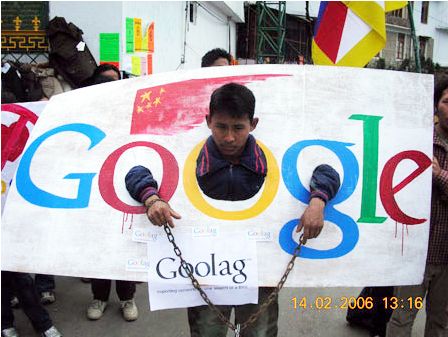
Googleevil

(charlessc - http://www.flickr.com/photos/charlesc/100343106/)

My favourite search tool, Lijit, has a feature on the top widgets. The top two by quite some distance are Google Analytics and Google Syndication (AdSense). Surprisingly mybloglog is third (well above Technorati and Twitter).

The post also breaks them down by type, with 'metrics' being the most common type of widget people add. They also show the most popular tools within each category, and it's here you really see the dominance of Google. In the Analytics category Google Analytics scores 39.9% compared with Sitemeter in second place with 16.2%. In Ads, Adsense has a whopping 84.8% share of the market, and in video, YouTube unsurprisingly sweeps the board with 86.6%.

One rather ironic, and thus sweet result - Google comes third in Search (behind Snap and Lijit).

Still it shows one thing - all that twenty percent time is paying off for Google.

Blog as educational platform, VLE even

19650368_ad5e5c496e_o

(http://flickr.com/photos/jbird/19650368/ JBrd)

This is really an re. loads of other people post, but I wanted to pull them together for my sake anyway.

There have been a few experiments recently in taking open content and putting it in a blog. Not mindbendingly innovative and yet very powerful when you see it.

I remember Tony showing me something like this around the early 19th century which he had knocked together using a penny farthing, carrots and a chimney sweep (Update: it was Nov 06), and he comments on the recent stuff. Then recently David Wiley took some of his open education course and republished it in WordPress. It looks really neat, enticing, well structured. Looks a damn site more inviting than, say, a Blackboard version of the course might.

Then Jim Groom took the OU's openlearn Goya stuff and put it in Wordpress. Guess what? It looks better than the original.

Brian Lamb (who easily has the best titles for blog posts around) sums it all up nicely and points to a session Jim Groom and D'Arcy Norman are doing at Northern Voice entitled  'Don't call it a blog, call it an educational publishing platform'. Which sums it up really.

There are several things of interest here for us ed techies. The first is that presentation matters. I like the look of these blog courses, and that would make me more inclined to participate in them, make me feel well disposed towards them and make me feel as though the people running them were vaguely modern and knew what they were doing. The aesthetics of the interface is something we pay scant attention to in education.

The second thing is that you may be thinking it's just a blog, it doesn't have tool X or Y that my VLE might have. Well maybe, but I think we're in disruptive technology territory here. Disruptive technology doesn't do the same things better for the same audience, it is often worse on some things, but it offers some new features for a different audience. The new features I would argue here are:

  1. Ease of publishing - whether it's your own content or others, getting in to blogs is fairly straightforward
  2. Ease of extendability - adding widgets and tools to blogs is just a click away, since blogs have become the universal platform across the web.
  3. Openness - you can pull content and tools in from anywhere
  4. Ease of navigation - blogs come with an inbuilt navigational structure that is easily co-opted for course structure.

I wonder if this isn't another example of how we in education create complex solutions to complex problems, whereas simple solutions often work better.

The most difficult part of installing Linux?

Getting Windows to burn the CD in the first place.

Doug Clow has a nice log on installing Ubuntu on an old laptop. This is really by way of outing Doug as a proper blogger now - welcome to the fold Doug, all your academic publications are behind you now...

Blogs aren't a luxury

Blog

(lawgeek - http://www.flickr.com/photos/jdawg/110174487/ - may take some looking at!)

The recent kerfuffle over openlearn made me reflect on the relationship between the individual blogger and their institution. I'm not going to go into the debate about openlearn itself, but rather point out some things about the incident. From the OU Tony, Laura and myself have all responded. Laura's probably counts as a semi-official response, while Tony's and mine are independent to the extent that we could say what we like (although not independent in that we are obviously affiliated with the OU and to an extent the project).

Here are some observations:

i) There was a very quick response. I saw Tony had twittered the original post, I blogged about it, then twittered my response, then Tony blogged, all within a couple of hours. Had we waited for an official response to be agreed and worded it would have taken days, if not weeks, by which time it would have been irrelevant anyway.

ii) Stephen Downes had blogged about Seb Schmoller's post. He then blogged about mine and Tony's response. A lot of people read Stephen's posts, so if Tony and I hadn't responded there would have been no counter-argument for this audience.

iii) Stephen and others only picked up on our responses because we have spent a long time establishing a reasonable blogging reputation.

iv) Both Tony and I didn't feel any pressure to respond or defend openlearn. We weren't doing it at the behest of the OU, but rather as people who have a tangential relation to the project. This meant I was also critical of openlearn, and Tony has always been a friendly critic. For institutions this is a difficult thing to grasp, you have to give us the freedom to be critical in order for our defence to have any meaning. In other words you have to relinquish control of your corporate image. Had I been requested to post a defence, I think I would have declined - I've worked too long at this blog to allow it to be an institutional mouthpiece.

What this really demonstrates to me is that if as an institution you haven't got reputable bloggers on your team then you are exposed to a world of criticism that you cannot engage with. For organisations having bloggers isn't a luxury, it's a necessity.

The Social:Learn project

I've been working on a project at the Open University for a while now, which has the working title 'Social:Learn'. It is born of the recognition that the OU (and higher education in general) needs to find ways of embracing the whole web 2.0, social networking world, and that the only way to understand this stuff is to do it. We've had some consultants working with us to develop the overall concept, including Stowe Boyd, Stuart Sim, Stephen Heppell and Euan Semple. There will be an official big splash announcement in July I think, but this is me doing some leaking.

The project has gone through the initial conceptualisation phase (this can be summarised as asking the question, 'so what is social:learn exactly?' repeatedly), and is now entering an initial development stage. It's still early days and I'll blog more about it as it goes on. Below is an overview slidecast that I gave to the Hewlett Foundation last month.

This is obviously an area that lots of people are working on and interested in, so maybe Social:Learn can act as the focus for this, or at least be one more element in the mix. If you'd be interested in playing with any stuff when we have it available, let me know.

In defence of openlearn

Donald Clark weighs in with some heavy criticism of the Open University's openlearn project. Some of his criticism is valid, but a lot isn't.

It’s really no more than a repository of old OU print documents with some tools on top.

This is a naive view of just how much effort it takes to convert existing material. These aren't simply PDFs of existing units. The trouble is with taking legacy material and converting it - often there are cross references that don't make sense, outdated historical references, and mention of the overall course context (e.g. 'In your assignment'). The openlearn team thus needed to create a system for 'scrubbing' material to make it contextually independent and then putting it online.

To be honest I think I could have published this lot using free software in less than a week or two.

Believe me Donald, you couldn't, for all the reasons I've mentioned above.

Moodle is famously free, but dwell on the fact that the OU have spent a cool million in development time for this ONE implementation. Perhaps the most expensive free lunch on record.

Here he is confusing the spend on adapting, implementing and improving Moodle as the OU's central VLE, ie for use on our courses, and not for the openlearn project, which is just a side project. Is it just me or is there some anti-open source sentiment underlying this?

As I sampled many of the courses it struck me how weak much of the content was in terms of academic credibility. Like many course notes written from within an institution, rather than published text, it has the feel of being cobbled together by good experts, but not the best.

Here we are coming from different backgrounds. The material was written for independent studiers, who are isolated and at a distance. It may not be exciting, but it does work academically. This is why people study rather than just reading airport business books.

Interestingly, not a single lecture online.

Here he is showing his ignorance of the OU. We don't do lectures. We're a distance education university.

It’s only 5% of the OU output but the course choices do seem a little odd.

The choices have been made in order to give a coverage across all subject areas, and sometimes expediency has won out - e.g. which courses can be converted quickly. Much of the project has been about establishing a set of systems so that future content can be delivered.

The levels of interaction are abysmal and there’s no real assessment

The aim of openlearn was always to take existing OU material and make it freely available, NOT to develop new material specifically for the project. But this is where I begin to agree with him, interaction is low and informal assessment could be better.

I still love the OU and all it stands for, even if it is dragged down by the desire of its academics to mimic every other university.

I simply don't understand this catty comment. In what way are OU academics trying to mimic every other university?

Seb Schmoller takes a more reasoned response:

The impression you get is that there was internal pressure from those saying "but we depend on people to pay for our courses, we cannot risk putting some of the 'top sellers' into Open Learn".

I was involved in the initial phase of openlearn, and why I can understand Seb saying this, it isn't actually the case. We were quite keen to explore the business implications and not make it just a 'taster' site. I think the choices have been driven more by which academics have come forward with courses, what are available, what can be converted, etc.

I think that if the OU does not use OpenLearn to showcase its best stuff, the OpenLearn initiative risks being judged as some rather pedestrian content sitting in a (possibly) innovative environment. That would be a major missed opportunity.

I think there is something in this, openlearn is worthy, and useful, but it could be more. The team have focused hard on getting some of the boring stuff done which isn't sexy, but does set the framework for a sustainable model of opening up content. Now the challenge is to do more with it. In case he is too modest to do it I would point to the work Tony Hirst has done in taking openlearn content and mashing it around as a good model.

I think overall openlearn has been guilty of veering into a traditional, university type model (top down, quality assured, proper processes, etc) rather than a more radical 2.0 approach, but in both content and intent it represents a huge step forward for both the OU and UK Higher education. After all, I don't see Epic releasing all their courses for free.
What would Russell make of it?

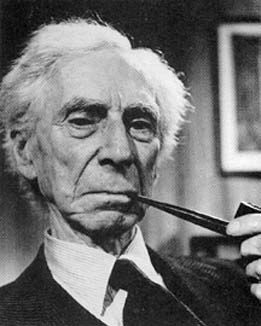
Russell2 John recently posted about Bertrand Russell and his essay 'In Praise of Idleness'. When I was a student this was one of my favourite books, largely because I was idle and was trying to justify it (and you've got to admire someone who smokes such a pipe). I have been thinking about this a lot recently (sadly, this is true, this is what I think about), and considering what Russell would make of modern day Britain or the global society.

He puts several arguments forward in the essay, the first being that work (which was physical work then), was a tool for governments. The second is that leisure is a good thing, and that

"The idea that the poor should have leisure has always been shocking to the rich. In England, in the early nineteenth century, fifteen hours was the ordinary day's work for a man; children sometimes did as much, and very commonly did twelve hours a day. When meddlesome busybodies suggested that perhaps these hours were rather long, they were told that work kept adults from drink and children from mischief."

He criticises the uneven distribution of labour:

We have no attempt at economic justice, so that a large proportion of the total produce goes to a small minority of the population, many of whom do no work at all. Owing to the absence of any central control over production, we produce hosts of things that are not wanted. We keep a large percentage of the working population idle, because we can dispense with their labour by making the others overwork.

With an even distribution he argues that everyone will have time for leisure, leading to some kind of artistic utopia:

In a world where no one is compelled to work more than four hours a day, every person possessed of scientific curiosity will be able to indulge it, and every painter will be able to paint without starving, however excellent his pictures may be.

So what would Russell make of us now? I think he would be simultaneously overjoyed and dismayed. Undoubtedly we have more leisure time than we did in 1932, and this is fairly well distributed (although sadly the 4-hour working day hasn't caught on). With labour saving devices and a convenience lifestyle as well as more holidays and shorter working hours there is a good deal of leisure time for the average person compared to the time of Russell. But what do we do with it? Is it the great explosion of artistic endeavour and creation that Russell predicted?

Yes and No. Russell would I think be shocked to see that when given leisure time a lot of us spend it slumped in front of the TV drinking Pinot Grigio and watching other people on reality shows. But, the whole 2.0, user generated content world would delight him I think. For his painter who wants to paint without starving read Photographer who shares with the world via Flickr. And then there are all the bloggers, wiki writers, YouTube creators, podcasters who create material of mind-bendingly variable quality, but they are engaged in being creative, and that is fulfilling. So the next time someone bemoans the quality or self-indulgence of user generated content, quote Russell at them:

Modern methods of production have given us the possibility of ease and security for all; we have chosen, instead, to have overwork for some and starvation for others. Hitherto we have continued to be as energetic as we were before there were machines; in this we have been foolish, but there is no reason to go on being foolish forever.

Downes vs Wiley - Cato and Cicero revisited

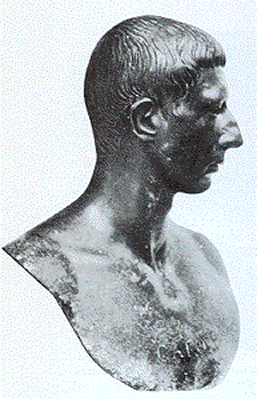
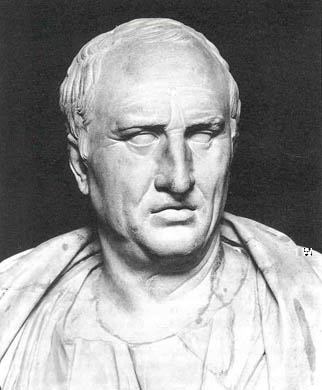
Cato2_2The official launch of the Cape Town Declaration getting a good bit of attention. I'm not going to critique the declaration specifically, but rather come at it from the perspective of the debate between two main protagonists, namely Stephen Downes and David Wiley. I hope neither takes offence as I like and admire both of them, but I think there is a means of understanding the issues around the declaration by exploring their differences over this. And I'm going to do this by revisiting a previous analogy, namely that of Roman senators Cato and Cicero.

For the purposes of this post, Cato = Stephen and Cicero = Wiley. Cato and Cicero both believed passionately in the same higher level goal, ie the establishment of the Roman Republic. Yet they frequently clashed about what was the best way to achieve it. In the same way I think Stephen and David both believe passionately in the overall aim of open education, but have differing views as to how it should be realised.

Cicero_2 Cato was the purist, unbending and uncompromising. Cicero was the pragmatist, willing to compromise and work with a range of people to advance the republic. Cato often thought Cicero compromised too much, thus rendering his beliefs invalid. Cicero was often infuriated that Cato wouldn't compromise and through this played in to the hands of the anti-republicans. Taking our modern day counterparts, it seems to me that most of Stephen's objection comes down to the inclusion of commercial entities in the CTD, e.g. from this post

"And goodness, the internet is already awash with really vile and intrusive commercial activity, do we have to export it too? We have the opportunity to do something really special in the world; why do we have to carve into every declaration of principle a paean to Things As They Are (and Those Who Profit From Them)?"

It is not just the presence of commercial entities in the declaration that is at stake here, but the question of whether any educational services can be charged for. David Wiley makes the distinction between nonrivalrous goods (content basically) and rivalrous ones (support). For open education to be sustainable he sees that monetising the latter is probably essential:

If you believe that rivalrous services are a critical part of learning and of education, then you have two choices: (1) either welcome those who are willing to create sustainable ways of providing these services into our community, or (2) continue to try to drive the evil companies away, simultaneously guaranteeing that a critical part of the support infrastructure never comes into being.

His option 1) is pure Cicero, and 2) pure Cicero criticism of Cato. Now, a lot of learning can be done informally, peer supported, community based, as seen for example when we analyse the type of learning that takes place in open source communities. But Wiley argues that this can't be all of it, and if you want teachers, experts, or maybe even accreditation and tech support, then in a capitalist world someone there need to be models of sustaining this.

So, if we take our Cato and Cicero model, let's look at the options:

  1. You don't believe in the republic anyway
  2. You'd like to believe in it, but don't think it will ever happen (there will always be a Caesar who comes along)
  3. You believe in it and are willing to work within the existing structures to achieve it
  4. You believe in it but think the existing structures need a revolutionary change

Most publishers and related companies sit at 1) A lot of institutions reside at 2). Wiley is at 3) and Downes at 4).

Me? I'm actually interested in the business models that arise from a disaggregated education system, I don't have any problem working with commercial entities and I compromise at the drop of a hat, so I'm a 3) kinda guy, although I always have an admiration for those who stick to their principles around 4).