« October 2007 | Main | December 2007 »

The Cape Town declaration - some thoughts and suggestions

A group of experts, charities, commercial organisations and interested parties got together in Cape Town to look at the issue of openness in education. The output is this declaration. Before coming on to criticism of it, here are some of the key points:

Educators worldwide are developing a vast pool of educational resources on the Internet, open and free for all to use. These educators are creating a world where each and every person on earth can access and contribute to the sum of all human knowledge.

We could argue that, but they're right to bring attention to the growing OER movement.

They are also planting the seeds of a new pedagogy where educators and learners create, shape and evolve knowledge together, deepening their skills and understanding as they go.

Hooray! Good to see pedagogy get a mention, ie it's not all content. Indeed you could argue that all of the OER effort has been a bit disappointing thus far in its impact on higher education. Maybe that's because the pedagogy angle isn't there.

It then goes a bit content-centric again:

These resources include openly licensed course materials, lesson plans, textbooks, games, software and other materials that support teaching and learning.

But you feel some on the committee argued strongly for the next point:

However, open education is not limited to just open educational resources. It also draws upon open technologies that facilitate collaborative, flexible learning and the open sharing of teaching practices that empower educators to benefit from the best ideas of their colleagues. It may also grow to include new approaches to assessment, accreditation and collaborative learning.

This is at least as, if not more, important than the content. Having technologies that shape the way we communicate and collaborate will have an influence back into education. And as for assessment and accreditation - these are absolutely key to changes in educational practice.

They then propose three strategies:

  1. Educators and learners - get involved, so a bottom up drive.
  2. Open educational resources - individuals and institutions to release their content. I'm all for this, but again it's a bit content-centric for my liking - 'release the content and they will come' hasn't been shown to be a particularly effective strategy.
  3. Open educational policy - governments, school boards etc should make open education a high priority, so the top down balance to 1)

I wouldn't argue with any of these necessarily, although I would have worded the declaration differently. In a thoughtful piece Stephen Downes is very critical. His main point is that it is a closed document, rather foisted on the rest of us from a group of experts. This is hardly in keeping with the spirit of the venture. He puts it thus:

I find myself at odds with the declaration written by a group of mostly American academics and advocates invited by a foundation to a private meeting in South Africa to author a "fixed and final" declaration on open educational resources...

I do not believe that a panel of hand-picked representatives representating overwhelmingly a certain commercial perspective is qualified or able to speak on behalf of the rest of us. The very people they name - "learners, educators, trainers, authors, schools, colleges, universities, publishers, unions, professional societies, policymakers, governments, foundations and others" - are mostly nowhere present in these deliberations.

As he says, why not put it in a wiki?

He also goes on to argue that it is rooted in the education system, and there is little about empowering self-learning, or peer learning. I'd agree with him here. I'm not sure that was their intention, they mention collaborative learning, so maybe they'd argue it is implicit in their statement. But I would have foregrounded it more, something along the lines of

New technologies, open content and an opening up of opportunities to participate means that radically new models of learning are now possible. These can be based around rich content discovery, social networks, informal learning, commons based peer production, loosely coupled systems, democratic communities and a long tail of interests. Addressing these challenges will require new models of pedagogy, accreditation, guidance, support, licensing and content production.

So will I sign up for it? Yes, there are more people aligned against open education than behind it, so the last thing we need to do is factionalise within our own camp. But, next time, let's eat our own dog food eh? 
Google answers existential question 'Where am I?'

Tony has a post on Google's new My Location service. It uses mobile phone cell tower identification (so no GPS required) to give you your location on Google Maps for mobile.

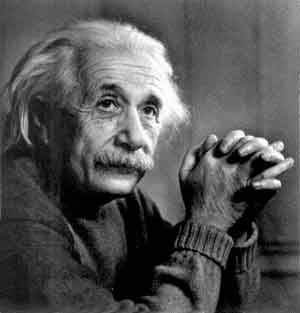
Alberteinsteinmechanics1 Reminds me of my favourite Einstein story - he once rang his wife Elsa and asked 'where am I? And where should I be?' If only he'd had Google...


Do you need to love a tool for it to be useful?

A recent survey over at the Centre for Learning and Performance Technologies (via John Dale) had responses from elearning professionals, asking them their favourite tools for learning.

Can you guess the top 5? Here they are:

  1. Firefox
  2. Delicious
  3. Skype
  4. Google
  5. Powerpoint

Now, given our recent VLE debates, on to the interesting bit. Where do you think Moodle came? Answer, a respectable 12th. And Blackboard? It didn't make the top 100.

Now, there are several things to consider here. Firstly, these were e-learning professionals that were surveyed, and their responses may well be different from the vast majority of other educators. The point being that Blackboard isn't aimed at elearning professionals necessarily, it's aimed at the 'average' (I know there's no such thing) educator who doesn't want to think about elearning. Just as Windows isn't really aimed at IT professionals, it's for the big market that occupies the centre of the distribution curve.

Secondly, the tools mentioned are useful for the individual, but that doesn't mean they solve some of the institutional issues that may be involved, such as authentication.

Okay, I've done my even handed part, now let's look at what it might also tell us. What a lot of the top 100 have in common is that they are customisable, adaptable and personal. Which brings me on to the title of this post - a lot of these tools are ones people really love, usually for one or more of the following reasons:

i) They do one job really well

ii) They are customisable/personal

iii) They have an easy social dimension

Now if you are the purveyor of, say a commercial VLE, or any commercial elearning software, you should ask yourself if your product really hits any of those targets.

The alternative view is that although individuals may love some tools that doesn't really matter - it's senior management who buy enterprise systems and 'loved by users' is not usually on their specification list. Shame.

Who needs money in the blogosphere?

Over at Read/Write web there is a piece on why there is no money in the long tail of the blogosphere. I wouldn't necessarily argue with the conclusions, but my reaction was similar to Hugh MacLeod's twitter response 'duh... Hello 2003'. The author concludes by asking whether the long tail of blogging is stable. The implication being that people are only blogging to make money and as soon as they realise they can't they'll go elsewhere (presumably they'll think pyramid selling schemes are a neat idea).

I rather thought we'd gone beyond all this. People making money from blogging are obviously in the minority - but so are people whose intention is to make money. Must we really go through all the motivations for blogging again?

But, having said that there is a monetary value from blogging. It just isn't a direct one. As Stowe Boyd said "when asked what was the single most important business decision that I had ever taken I responded "blogging."  That is, if you are a business then your blog can be the best source of building your brand that there is. But, and this is crucial for all those who want to make money from blogging - the blog comes first. If your blog is interesting then consultancy, requests to speak, produce reports, be a business partner or whatever may flow from it. Blogs are good at building personal brand. Anyone who is blogging to make money will simply be producing a dull blog and readers will look elsewhere.

But most of us blog because a) it's the most creative thing we do and we are creative animals, b) it establishes us in the online world and c) it's a good place to work through ideas. Those are actually quite powerful motivations, and they don't need to be monetarized.

(I've used 'personal brand' and 'monetarized' in one post - I feel unclean)

Wealth of Networks session

On Friday John Naughton ran an interesting session around Benkler's Wealth of Networks. It was particularly welcome as I feel rather guilty that I've never actually finished Benkler's magnum opus.

John first set the context for the book, talking about the semiotics of the title and borrowed Castell's term about informed bewilderment to describe our current state when we look at the changes around us. That is, we have no shortage of data about what's happening, but we are still unsure as to what it all means. Benkler's book can be seen as an attempt to cast a scholarly light on this state of bewilderment.

Part of the reason for this bewilderment is that our analytical tools are not as useful as they once were (which is not to say they are completely useless). As John put it economics can be categorised as the analysis of scarcity, whereas what we have in a digital world is abundance. The scarce resource now is attention, and here the competition is now greatly increased from the days of TV dominance.

John also talked about the 'convergence fantasies' of many industries which always boil down to 'converge on to my device'. He argued that convergence happened long ago - onto the net.

He summarised Benkler's book as having six main arguments:

  • Until recently we had a highly industrialised info economy
  • This marginalised non market cultural production (“social production”)
  • ICT has reduced the cost of production and publication
  • Greatly enhanced power and potential of social production
  • This has major implications for economic, social cultural and political life
  • There will be a struggle between old world and new world.

We then went on to discuss three issues:

  1. How plausible is Benkler's analysis?
  2. What might it mean for education (and the OU)?
  3. What might it mean for society?

In terms of 1) I made the point that to an extent it was empirically true - that in open source communities, wikipedia, flickr, etc social production was already a major economic force. So even though critics (Carr, Gorman, Keen et al) may argue against it, the best response is 'yes but look at the facts'. I was reminded of Clay Shirky's memorable phrase regarding AT & T programmers when they first saw open source support in action:

"They didn't care that they'd seen it work in practice, because they already knew it couldn't work in theory."

John set up a wiki for the session which has further references. 

LAMS presentation as slidecast

The world's least engaging voice returns with another slidecast. This is the presentation I gave to the LAMS conference (via Skype). It looks at the differences between web 2.0 and higher ed and how learning design can help bridge the gap. I've covered this in previous posts, but just in case you want the semi-live version.

I'm an Edublog finalist!

I have been nominated (after dropping some hints) in the Edublog awards and am a finalist in the Ed Tech Support category (not sure that's where I fit, but not going to argue). It's difficult to relate how chuffed I am about this! I'm pleased to see Tony is also nominated. Anyway, it looks like Mobile Technology in TAFE is running away with it, so purely in the interest of making a competition of it, if you fancy swinging by and casting a vote for me, that'd be great.

Many thanks to those who nominated me - I now get to have a cool badge for my site:

Nombestedtechsup

Gordon Brown is the Steve McLaren of politics

I don't 'do politics' in this blog usually, but really, the analogy is too good to pass up. Look at the similarities:

  • Both were second in commands
  • Both took over from someone who had been in post for a long time.
  • Both of their predecessors left on a wave of unpopularity
  • Both enjoyed brief periods of (unexpected) success.
  • Both then made a series of strategic errors

I think the foot and mouth outbreak was Gordon's draw with Macedonia, the election that never was his away defeat to Croatia, and this week's armed forces attack his away defeat to Russia. If the analogy is to be played out in full, that means by my reckoning he only has a catastrophic home defeat to Croatia left before they start looking for a successor. Wonder what it could be?

Filesharing and the attrition of centralised systems

I'm a dog with a bone now...

Following on from my previous post about the annoyance of mailbox size limits, this post from Judy O'Connell caught my eye - Fileurls just lets you upload and share files for up to 9 days, which can be password protected. So if anyone is planning on sending me an email with an attachment, can they just use this instead please (or Google docs is fine too)?

Which got me thinking - in our recent debate around loosely coupled systems one of the arguments against them was that educators wouldn't want to do it. But I think the way it happens is that we still have the centralised systems, but their boundaries become blurred. For example, we still use email, but increasingly we use tools like the ones above, which are outside university systems, to actually share files. Then we use Skype for chats or small tutorials. Then one educator sets up just a placeholder in the VLE which says 'Go to this wikispace for the course' or 'the course will be delivered through my blog'. There is thus a process of attrition around the institution's systems which after a while makes them untenable, or largely irrelevant.

What Mailbox limits reveal

Grainne posted recently about the frustration of continually getting the 'Your mailbox is over its size limit' in our OU email accounts. I can't tell you how annoying this - sometimes I am just trying to send a quick response to someone before I have to dash out of the door, but it won't let me because I have to find and delete any attachment over 2K to free up space. Grrrr.

Full

This isn't OU bashing, I've heard the same from people at other universities and also people not in higher education (I know, they do exist apparently). It's a small thing but it reveals a number of more important issues:

i) In a time when free email accounts offer gigs of storage, why do institutional services offer a poorer service. Is this another argument for the loosely coupled, or at least outsourced systems (as an aside, good to see Niall and Tony making up over their debate around this).

ii) It portrays a top-down attitude from IT providers to how we should use their systems. I am told when I complain that I shouldn't use my inbox as a filing system and I should make offline folders. Wrong, I should use them in whatever way is convenient to me (and see next point about filing).

iii) It is a classic example of Weinberger's distinction between filtering on the way in and filtering on the way out. IT people want me to filter on the way in, that is to save messages to appropriate folders. I want to filter on the way out, that is to search for emails according to different criteria. Faced with information overload, filtering on the way out is the best solution.

So the next time you get a mailbox full message, give them points i) to iii). Then quietly set about deleting your messages.